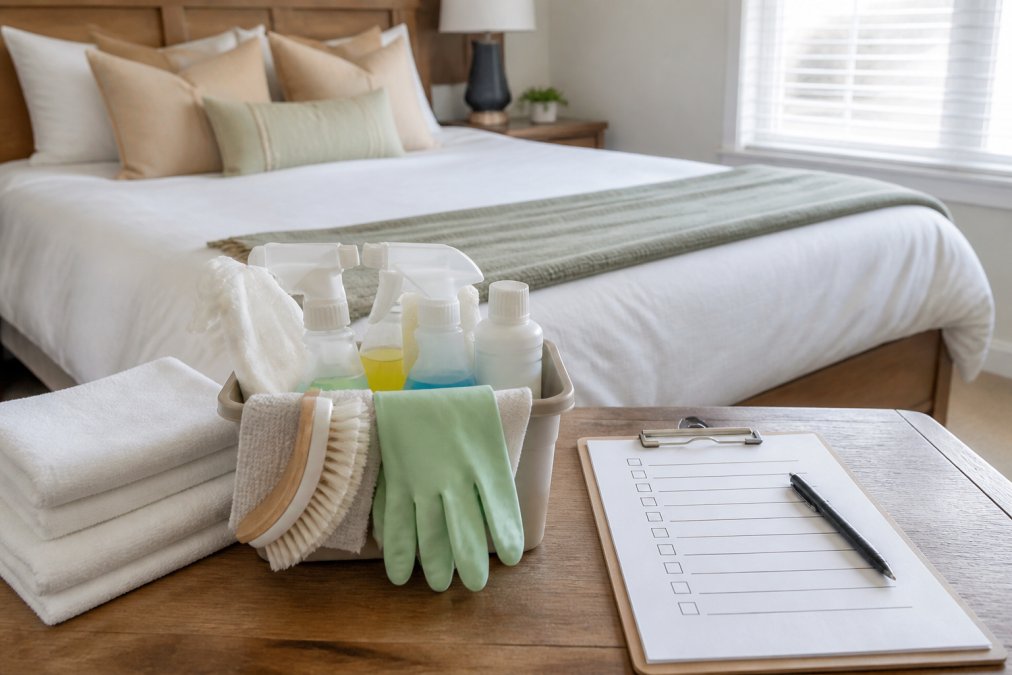
Best Checklist for Airbnb Turnovers: 7-Step System
Table of Contents
- Why a Structured Airbnb Turnover Checklist Matters
- The 7-Step Airbnb Turnover System
- Step 1: Bedroom and Linen Preparation
- Step 2: Kitchen Sanitation and Appliance Check
- Step 3: Bathroom Deep Cleaning and Restocking
- Step 4: Living Area Maintenance and Staging
- Step 5: Safety and Security Checks
- Step 6: Inventory Management and Restocking Supplies
- Step 7: Final Inspection and Quality Control
- Using an Airbnb Cleaning Checklist Template
- How to Manage Airbnb Turnovers Efficiently
- Understanding Airbnb Turnover Cleaning Cost
- Eco-Friendly Cleaning Products for Guest-Ready Properties
- Common Mistakes That Damage Guest Experience
- Conclusion
- Frequently Asked Questions
Last Updated: September 22, 2026
Why a Structured Airbnb Turnover Checklist Matters
A best checklist for airbnb turnovers isn't just a nice-to-have, it's the difference between a 5-star guest experience and a cancellation. When guests arrive to find dust on baseboards, a half-stocked kitchen, or unmade beds, they're already disappointed before they've unpacked. A comprehensive, repeatable turnover process protects your property reputation and keeps bookings flowing.
Consistency is the challenge: one cleaner deep cleans the oven while another skips it. Guests notice these gaps and leave reviews accordingly. A structured turnover checklist ensures every detail gets attention every time, eliminating guesswork and giving your team a clear roadmap.
The 7-Step Airbnb Turnover System
A turnover process built on these seven steps creates a guest-ready property every time. Each step targets specific areas that guests notice first, and each includes the kind of detail that separates spotless from "good enough."
Step 1: Bedroom and Linen Preparation
Strip all linens immediately after checkout. Wash them in hot water with a commercial-grade detergent to sanitize thoroughly. While linens wash, vacuum under the bed, inspect the mattress for stains, and wipe down all surfaces including nightstands and lamps.
Make beds with hospital corners, tight and crisp. Check pillowcases for tears and replace anything questionable. Fluff pillows, arrange throw blankets, and add fresh flowers or a small amenity on the nightstand if your property includes them.
Inspect the closet: remove previous guests' hangers, dust shelves, and ensure uniform hangers. An organized closet signals attention to detail.
Step 2: Kitchen Sanitation and Appliance Check
Empty the refrigerator completely, remove old condiments, wipe shelves, and check for spills or odors. A clean fridge prevents food safety issues.
Wipe appliance exteriors and handles with disinfectant. Clean the stovetop, burner grates, and backsplash. Clean the oven interior and microwave inside and out. Run the dishwasher on a hot cycle with a cleaning tablet.
Sanitize countertops, sink, and faucet. Stock essentials: dish soap, hand soap, paper towels, and cooking utensils. A welcome basket with coffee, tea, or snacks adds hospitality.
Step 3: Bathroom Deep Cleaning and Restocking
Clean the toilet inside and out with commercial-grade disinfectant. Scrub the shower or tub, paying attention to grout lines. Squeegee shower walls to prevent water spots.
Wipe mirrors, faucets, and fixtures until they shine. Clean the sink basin and countertop. Stock fresh towels, folded neatly and arranged by type. Replace the shower curtain if worn.
Restock toiletries: shampoo, conditioner, body wash, hand soap, and lotion. Include a trash bin with liner. Leave toilet paper on the holder plus an extra roll under the sink.
Step 4: Living Area Maintenance and Staging
Vacuum carpets and rugs, including under furniture. Mop hard floors. Dust all surfaces, shelves, picture frames, light fixtures, and baseboards thoroughly. Guests notice clean baseboards as a sign of meticulous care.
Check upholstered furniture for stains. Fluff cushions and arrange throw pillows. Wipe the television remote and electronics guests will touch. Clean windows and sills.
Stage the living area: arrange furniture to create conversation areas, add fresh flowers or plants, and leave a welcome guide with WiFi password, house rules, and local recommendations.
Step 5: Safety and Security Checks
Test smoke and carbon monoxide detectors. Verify fire extinguishers are accessible and not expired. Check that all doors and windows lock securely.
Inspect for hazards: loose railings, sharp edges, exposed cords. Ensure pathways are clear and well-lit. Check all light bulbs work.
Test the thermostat and set to a comfortable temperature. Verify appliances operate safely. Document property condition with photos before guests arrive.
Step 6: Inventory Management and Restocking Supplies
Create an inventory of linens, towels, kitchen equipment, toiletries, and amenities. Count items as you restock and note any missing or damaged items.
Restock cleaning supplies in a designated closet. Keep microfiber cloths, disinfectants, and paper towels accessible for guests.
Maintain a restocking log to track supply usage and order efficiently. Bulk ordering reduces costs and prevents shortages during peak season.
Step 7: Final Inspection and Quality Control
Walk through the property with a critical eye. Check every room, surface, and detail. Open drawers and cabinets to ensure they're clean inside.
Take photos of the guest-ready property as proof of condition and to spot inconsistencies across turnovers.
Create a damage report form to document wear, stains, or broken items. Use this to track maintenance needs and plan repairs during slower seasons.
Using an Airbnb Cleaning Checklist Template
A printed or digital template keeps your team accountable and ensures consistency. The right template saves time, reduces errors, and creates a repeatable process that scales.
Digital Tools vs. Printable Checklists
Digital tools like Turno's turnover automation platform sync with your booking calendar and send automated reminders to cleaners. They include photo verification, task tracking, and payment automation. Digital tools work well if you manage multiple properties or coordinate with external cleaning crews.
Printable checklists offer simplicity and flexibility. Many hosts print a checklist, laminate it, and use a dry-erase marker. This approach requires no software subscription and works offline. Printable templates from resources like Lodgify's property management templates provide professional formatting you can customize.
Digital tools reduce coordination time and add accountability. Printable checklists are cheaper and easier to customize for property-specific needs. Choose based on your team size and property count.
Customizing Your Template for Property-Specific Needs
Your template should reflect your property's unique features. If you have a hot tub, add hot tub sanitation steps. If your kitchen has high-end appliances, include specific cleaning instructions. If baseboards are a priority, make that a dedicated line item.
Include time estimates for each task to schedule realistic turnover windows.
Add checkboxes or signature lines for cleaner confirmation. Include a notes section for damage or repairs needed. A customized template becomes your standard operating procedure.
How to Manage Airbnb Turnovers Efficiently
Turnover time directly impacts your booking calendar and profitability. The faster you turn a property, the sooner you can accept the next guest. Efficiency comes from process, scheduling, and team communication.
Turnover Time Management and Scheduling
Schedule turnovers with buffer time. If checkout is 11 a.m. and check-in is 4 p.m., a 3-hour turnover leaves 2 hours for unexpected issues.
Prepare the property before checkout: stock supplies, pre-wash linens, and identify damage while guests are still there. This catches issues early.
Batch similar tasks: dust all rooms, then vacuum all rooms, then sanitize bathrooms. This workflow is faster than cleaning one room completely.
Use a turnover checklist to track time. Note how long each step takes. Over time, you'll identify which tasks are bottlenecks and where you can improve.
Managing Your Cleaning Team and Communication
Clear communication prevents mistakes and missed steps. Provide each cleaner with a written checklist and walk them through your standards once. Show them what "spotless" means to you, point out baseboards, inside appliances, and high-touch surfaces.
Use a group chat or messaging app to coordinate schedules and share updates. Send photos of the property condition after each turnover so cleaners understand your standards. If a cleaner misses something, address it immediately with guidance, not criticism.
For teams managing multiple properties, assign cleaners to the same properties when possible. Familiarity with a property leads to faster, more consistent turnovers. Rotate properties occasionally to cross-train your team.
Pay cleaners fairly and offer bonuses for speed and quality. A motivated team delivers better results and stays longer. High turnover in your cleaning crew leads to inconsistent quality and higher costs.
Understanding Airbnb Turnover Cleaning Cost
Turnover costs vary based on property size, condition, and your location. Understanding costs helps you price rentals correctly and identify efficiency opportunities.
Many hosts allocate a portion of nightly revenue to cover turnover expenses.
Eco-Friendly Cleaning Products for Guest-Ready Properties
Guests increasingly prefer eco-friendly properties. Using non-toxic cleaning products protects guest health, reduces environmental impact, and supports your property's sustainability positioning.
Common Mistakes That Damage Guest Experience
The difference between 4-star and 5-star reviews often comes down to small details that hosts overlook.
Conclusion
A structured best checklist for airbnb turnovers transforms your guest experience and protects your rental income. The seven-step system covers every area guests care about, from fresh linens and sanitized kitchens to organized closets and safety checks. Consistency matters more than perfection; a repeatable process ensures every guest arrives to the same high standard.
Frequently Asked Questions
What are the most important items to include in an Airbnb turnover checklist?
The core items are fresh linens, sanitized high-touch surfaces, spotless bathrooms, clean kitchen appliances, and restocked guest amenities. Beyond basics, prioritize what guests notice first: baseboards, cabinet interiors, appliance exteriors, and the welcome area. A repeatable process ensures nothing is missed. Your checklist should also include safety checks (smoke detectors, locks) and a final property inspection to verify everything meets your 5-star standards before guests arrive.
How can I ensure my Airbnb turnover is consistent every time?
Use a standardized Airbnb cleaning checklist template that breaks the property into specific zones: bedroom, kitchen, bathroom, and living areas. Assign the same cleaner or team whenever possible, provide written procedures with photos, and conduct a quality control inspection after each turnover. Document any damage or supply needs. Consistency comes from a repeatable process, not from memory. Many hosts use digital tools or printed checklists that cleaners sign off on to prove completion.
What should be included in an Airbnb deep cleaning checklist?
A deep clean goes beyond standard turnover and includes inside cabinets and appliances, baseboards, upholstery, window sills, and light fixtures. It addresses areas guests don't use but notice if dirty. Include disinfecting high-touch surfaces with commercial-grade products, cleaning inside the refrigerator and oven, and washing windows inside and out. Schedule deep cleans quarterly or monthly depending on occupancy. This level of sanitization directly supports 5-star ratings and reduces damage reports.
How much do professional cleaning services charge for Airbnb turnovers?
Airbnb turnover cleaning cost depends on property size, turnover frequency, local market rates, and service depth. For accurate pricing tailored to your property and needs, contact local cleaning services directly for quotes. Chelsea Cleaning Company offers customized pricing based on your specific property requirements and turnover schedule.
