
How to Get Your Security Deposit Back: 2026 Guide
Table of Contents
- Understand Your State's Security Deposit Laws
- Create a Move-Out Cleaning Checklist for Renters
- Document the Rental Unit Before You Leave
- Know How Long Does a Landlord Have to Return a Security Deposit
- Review the Itemized Statement and Permitted Deductions
- How to Dispute Security Deposit Deductions
- Use a Security Deposit Return Letter Template
- Get Your Security Deposit Back: Final Steps
- Frequently Asked Questions
Last Updated: October 9, 2026
Understand Your State's Security Deposit Laws
Security deposit back rules vary significantly by state, and the most common reason tenants lose money is applying the wrong rule to their situation. Before you act, pin down three numbers: the deposit cap, the return deadline, and the penalty for late return.
The three numbers that matter
1. Deposit cap. Most states limit what a landlord can collect up front, commonly one, one and a half, or two months' rent.
2. Return deadline. Deadlines typically run from the move-out date, not the inspection date, and the most common windows are 14, 21, 30, 45, or 60 days.
3. Penalty for late or wrongful withholding. Many states allow double or triple the wrongfully withheld amount, plus interest and sometimes attorney fees; a few impose a flat penalty per violation.
How to find your state's rule in five minutes
- Search your state attorney general's website for "security deposit", most publish a plain-language landlord-tenant guide.
- Check your state's statutes directly: find the landlord-tenant chapter and the section titled "security deposits" or "return of deposit."
- Read your lease. It should reference the applicable statute, but a lease cannot override state law.
- Note the exact deadline language. "Reasonable time" is not a deadline; a specific number of days is.
State-by-state landlord-tenant law summaries
Where the rules diverge most
- Cleaning deductions. Some states allow them only if the lease explicitly permits it and the unit was left dirtier than when you moved in; others prohibit them outright.
- Painting and carpet. Several states treat ordinary repainting and carpet replacement as the landlord's cost of doing business; others allow prorated deductions based on useful life.
- Interest on deposits. Some states require deposits held in a separate account with interest paid, particularly for longer tenancies.
A quick self-check before move-out
- Does my deposit exceed my state's cap?
- What is my state's exact return deadline, and does it run from move-out or from a forwarding-address notice?
- Does my state require the landlord to provide receipts or estimates for deductions?
Create a Move-Out Cleaning Checklist for Renters
A detailed move-out cleaning checklist protects your security deposit back. Landlords expect the unit clean, not pristine. Document what you plan to clean so you can prove you left the space maintained.
Your checklist should cover every room and surface:
- Kitchen: wipe cabinets inside and out, clean appliances, degrease stovetop, scrub sink
- Bathroom: clean toilet, tub, shower, sink, mirrors, remove soap scum
- Floors: vacuum carpets, sweep and mop hard floors, remove stains
Professional move-out cleaning services like Chelsea Cleaning Company handle this systematically, using customized checklists tailored to your rental unit.
If you clean yourself, take photos after each room is complete. This visual proof matters when disputes arise.
Document the Rental Unit Before You Leave
Documentation is your strongest defense when fighting for your security deposit back.
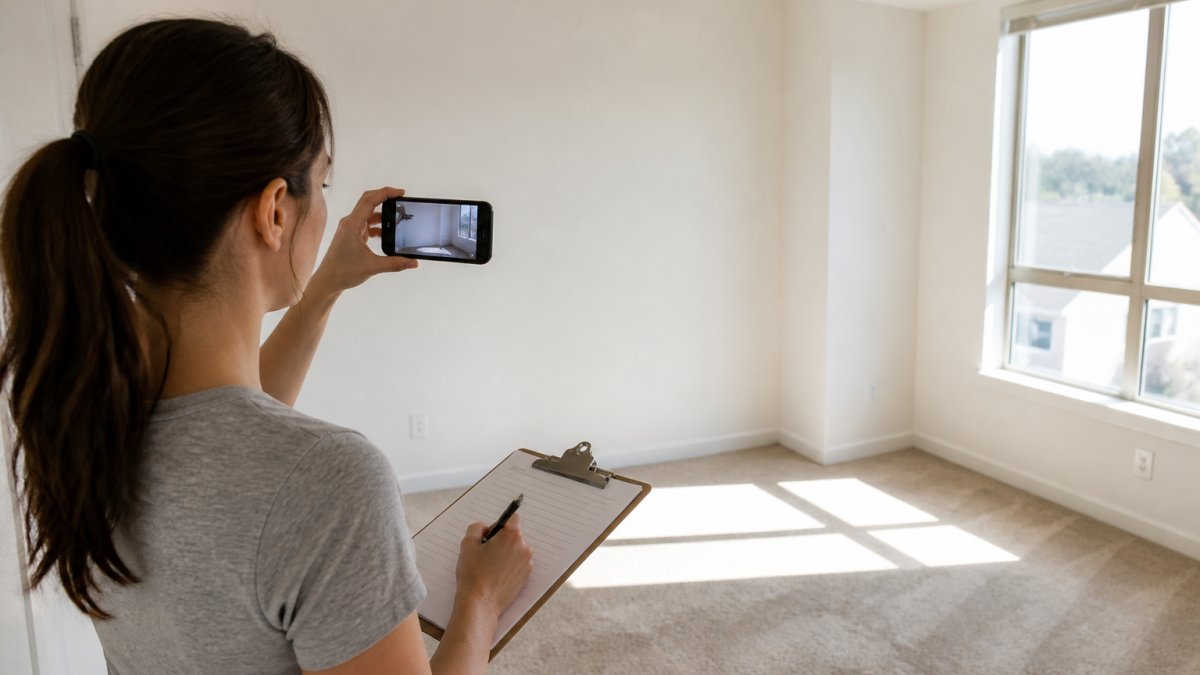
Your documentation should include:
- Photos of each room from multiple angles
- Close-ups of any existing damage, stains, or wear
- Video walkthrough narrating the condition
Email yourself copies of all photos and videos immediately to create a dated record, and keep the originals on your phone or cloud storage.
If your landlord later claims damage you didn't cause, your photos prove the unit's condition at move-out and shift the burden back to the landlord.
Know How Long Does a Landlord Have to Return a Security Deposit
How long does a landlord have to return a security deposit? The timeline varies by state, but most require return within 30 to 45 days after move-out; some allow 60 days, and a few require 14 days.
Your state law specifies the exact deadline. Missing this deadline typically triggers penalties, many states allow you to recover double or triple the wrongfully withheld deposit, plus interest and attorney fees.
Check your state's specific timeline:
- Most common: 30 days from move-out date
- Some states: 45 days
- A few states: 14 days or less
The clock starts on your move-out date, not the inspection date.
Review the Itemized Statement and Permitted Deductions
When your landlord returns your deposit (or part of it), they must provide a written itemized statement explaining any deductions. This is legally required in most states, and without it you have strong grounds to dispute.
Your itemized statement should list:
- Each deduction separately
- The reason for the deduction
- The cost or amount deducted
Permitted deductions typically include:
- Unpaid rent or utilities
- Damage beyond normal wear and tear
- Carpet replacement (only if damage is significant)
Not permitted deductions in most states:
- Normal wear and tear (carpet fading, small nail holes, minor scuffs)
- Routine cleaning (if the unit is reasonably clean)
- Painting (usually landlord's responsibility)
Compare the itemized statement to your move-out photos and documentation. If the landlord claims damage you didn't cause or deductions not allowed under state law, you have evidence to dispute it.
How to Dispute Security Deposit Deductions
If you disagree with the deductions, act quickly. Most states have strict dispute timelines, often 30 days from receiving the itemized statement, and missing that deadline can cost you the right to challenge them.
Step 1: Audit the itemized statement line by line
Build a simple table with four columns: deduction, amount, landlord's stated reason, and your counter. For each line, ask:
- Is this deduction permitted under my state's law?
- Does the landlord have a receipt, invoice, or estimate?
- Does the amount reflect actual cost, or is it inflated?
Deductions that fail any of those tests are your dispute targets. A focused, evidence-backed challenge is far more persuasive than a blanket objection.
Step 2: Preserve and organize your evidence
Before you send anything, lock down your proof:
- Export move-out photos and video to a cloud folder and email yourself a copy so the timestamps are independently dated.
- Save every text, email, and portal message with your landlord in one thread.
- Keep your certified-mail receipts and any delivery confirmations.
Landlords often back down when the tenant produces dated photos that contradict the itemized statement.
Step 3: Send a written demand letter
Your demand letter should do five things:
- State the move-out date and the date you received the itemized statement.
- Identify each disputed deduction and the specific reason it is improper under your state's law.
- Reference your evidence (photos, video, receipts) by date.
- State the exact amount you are demanding and a reasonable deadline, 10 to 14 days is standard.
- Note the statutory penalty for wrongful withholding in your state, if one applies.
Send it by certified mail with return receipt, and also by email if you have an address. Certified mail creates a delivery record; email creates a fast, timestamped paper trail.
Step 4: Escalate if the landlord ignores you
If you get no response within your stated deadline, escalate in this order:
- Second demand letter. Shorter, firmer, and referencing your first letter and its delivery date.
- State or local housing agency complaint. Many states and larger cities have agencies that investigate deposit complaints and can pressure landlords to comply. Filing is usually free.
- Small claims court. This is the workhorse remedy for deposit disputes. Filing fees are typically modest, the process is designed for people without lawyers, and many courts allow online or mail filing. You can generally recover the wrongfully withheld amount, statutory penalties where applicable, and the filing fee if you win.
Small claims court procedures and filing information
Step 5: Know your statutory leverage
Many states allow double or triple the wrongfully withheld amount, plus interest and, in some cases, attorney fees. A few impose a flat penalty per violation. Citing the specific multiplier in your demand letter changes the math for the landlord: settling is often cheaper than litigating.
When to get local help
If your deposit is large, your landlord is unresponsive, or your state's rules are ambiguous, a local tenant rights organization or legal aid office can review your case for free or low cost. For disputes involving habitability, retaliation, or discrimination, seek local help early.
Use a Security Deposit Return Letter Template
A formal letter increases your chances of getting your security deposit back without a fight. This template gives you a starting point:
[Your Name]
[Your Address]
[Your Phone Number]
[Your Email]
[Date]
[Landlord Name]
[Landlord Address]
RE: Dispute of Security Deposit Deductions, [Property Address], Move-Out Date [Date]
Dear [Landlord Name],
I am writing to dispute the deductions from my security deposit for the rental unit at [Property Address].
According to [State Name] law, the following deductions are not permitted:
- [Deduction 1]: [Explanation of why it violates state law]
- [Deduction 2]: [Explanation of why it violates state law]
I have documented evidence that contradicts these deductions:
- Move-out photos showing [specific condition]
- Video walkthrough dated [date]
- Cleaning checklist completed on [date]
I request a refund of $[amount] for the improperly deducted amounts within 10 business days of receipt of this letter.
Sincerely,
[Your Signature]
[Your Typed Name]
Customize this template with your details and state law references. Send it via certified mail and keep a copy.
Get Your Security Deposit Back: Final Steps
Getting your security deposit back requires persistence and documentation. Follow these final steps:
-
Keep all communications in writing. Never rely on phone calls or in-person conversations, email or certified mail creates proof.
-
Don't accept partial refunds without explanation. If the landlord offers part of your deposit, insist on a full itemized statement of all deductions.
-
Know your state's penalty provisions. Many states allow double or triple the wrongfully withheld amount plus attorney fees, which often motivates landlords to settle.
-
File in small claims court if necessary. The process is straightforward, no lawyer needed, and most courts allow online or mail filing.
-
Contact your state housing authority if the landlord ignores you. Many states have agencies that investigate deposit complaints and can pressure landlords to comply.
Chelsea Cleaning Company can help protect your security deposit by ensuring your rental unit is thoroughly cleaned before move-out. Our move-out cleaning service includes a detailed checklist covering every surface landlords inspect. With our 24-hour satisfaction guarantee, you know the cleaning meets professional standards.
Frequently Asked Questions
How long does a landlord have to return my security deposit?
The deadline varies by state. Most states require landlords to return deposits within 30-45 days after move-out, though some allow up to 60 days. Check your state's specific law to calculate your deadline. Landlords must provide an itemized statement of any deductions within this timeframe. If your landlord misses the deadline, you may be entitled to interest or penalties, depending on state law.
What counts as normal wear and tear versus chargeable damage?
Normal wear and tear includes minor scuffs, faded paint, worn carpet, and small nail holes, expected from regular living. Landlords cannot deduct for these. Chargeable damage includes deep stains, large holes, broken fixtures, or damage beyond ordinary use. Document the unit's condition at move-in and move-out with photos and written notes to dispute unfair deductions claiming damage was pre-existing.
Can a landlord deduct cleaning costs from my security deposit?
Yes, but only if the unit is unreasonably dirty beyond normal wear and tear. Most states allow deductions for cleaning costs if the tenant left the unit in unclean condition. However, landlords cannot charge for routine cleaning if you left the unit reasonably clean. Get a professional move-out cleaning to protect your deposit and provide evidence of the unit's condition.
What should I do if my landlord withholds my security deposit unfairly?
Send a written dispute letter referencing your state's security deposit law and requesting itemized proof of deductions. Include photos, the move-out inspection report, and proof of the unit's condition. If the landlord doesn't respond within 14-30 days (depending on your state), file a claim in small claims court. Many states allow you to recover the full deposit plus interest or penalties if deductions were unjustified.
Getting your security deposit back doesn't require a lawyer or months of fighting. Know your state's laws, document everything, and follow the process. Most landlords comply when faced with clear evidence and a formal dispute letter. If yours doesn't, small claims court is straightforward and often in your favor. Start now by checking your state law and taking those move-out photos.
