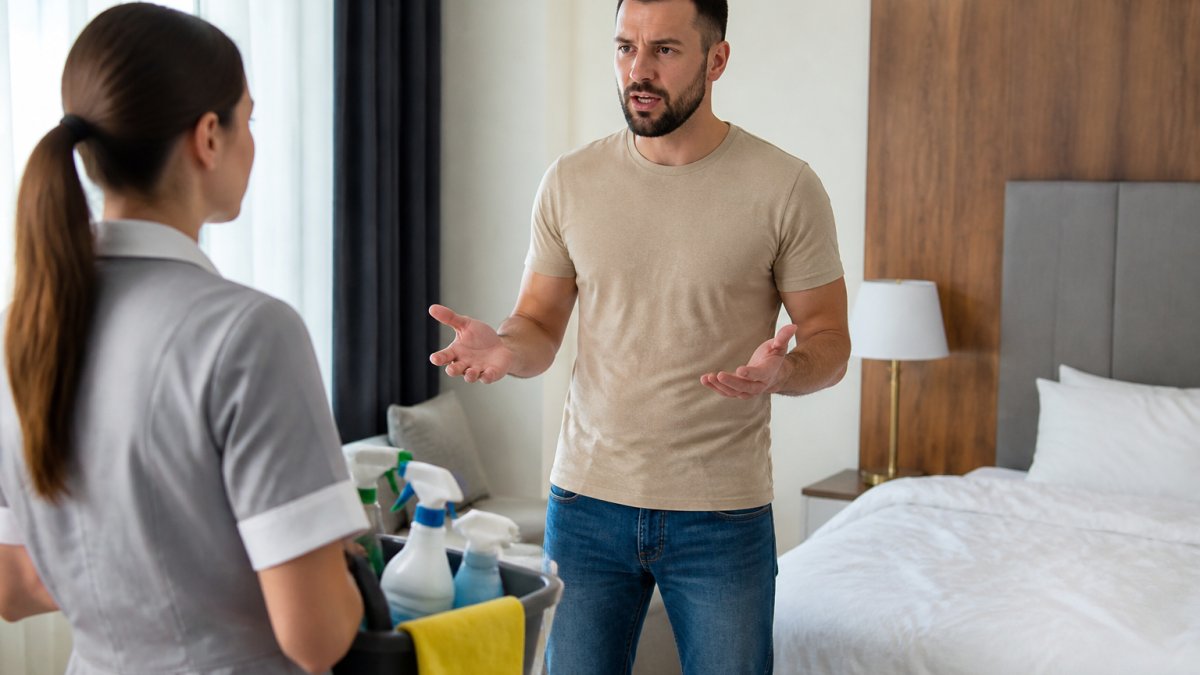
How to Handle Guest Complaints About Cleanliness
Last Updated: October 25, 2026
Quick Summary
How to handle guest complaints about cleanliness starts with acknowledging the issue within 5 minutes, inspecting the reported area within 15 minutes, and offering at least two remedy options within 30 minutes. Apologize without arguing, gather specific details, and distinguish between routine complaints like dust and serious health concerns like mold or pests that require immediate escalation.
- Acknowledge complaints within 5 minutes and complete a quick inspection within 15 minutes to respond to facts, not assumptions.
- Offer at least two remedy options within 30 minutes: reclean, room move, partial refund, or checkout with refund.
- Distinguish routine complaints from health and safety concerns; mold, pests, and contamination require escalation, not standard reclean.
- Document all complaints and follow up in writing within 24 hours to log the root cause for your housekeeping team.
- Use a cleaning checklist covering tasks like scrubbing toilets, wiping surfaces, mopping floors, and checking for hair or debris.
Table of Contents
- Why Guest Complaints About Cleanliness Demand Immediate Attention
- How to Respond to a Cleaning Complaint Within the First Hour
- Investigate the Issue and Communicate with Housekeeping
- Using a Short-Term Rental Cleaning Checklist to Prevent Complaints
- Airbnb Turnover Cleaning Best Practices for Quality Assurance
- Responding to Cleanliness Reviews and Protecting Your Reputation
- Distinguishing Routine Complaints from Health and Safety Concerns
- Get a Professional Cleaning Partner to Eliminate Future Complaints
- Frequently Asked Questions
Why Guest Complaints About Cleanliness Demand Immediate Attention
Learning how to handle guest complaints about cleanliness is essential.
How to handle guest complaints about cleanliness is an important consideration for short-term rental hosts.
How to Respond to a Cleaning Complaint Within the First Hour
A response workflow can help organize how you address a complaint.
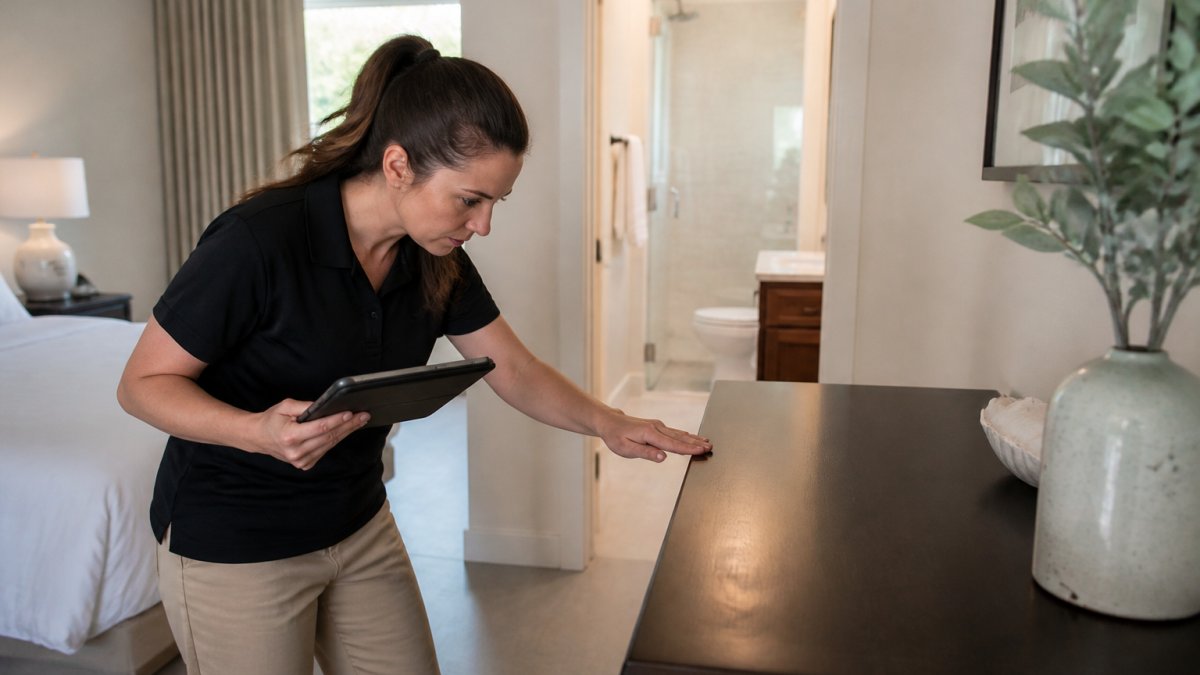
A Timed Response Workflow for Frontline Staff
Give every staff member the same sequence and clock. A possible workflow is:
- Within 5 minutes: Acknowledge the complaint in person, by phone, or in the booking app's message thread. Confirm you've heard the specific issue and give a callback time.
- Within 15 minutes: Complete a quick inspection of the reported area, either yourself or by dispatching a housekeeper, so you're responding to facts, not assumptions.
- Within 30 minutes: Present the guest with at least two remedy options (reclean, room move, partial refund, or checkout with refund) and let them choose.
- Within 60 minutes: Confirm the remedy is complete and ask the guest to verify the result in person or with photos.
- Within 24 hours: Follow up in writing, document the complaint, and log the root cause for your housekeeping team.
Acknowledge and Apologize Without Arguing
Acknowledge the guest's experience without excuses. Don't argue about whether the room was actually clean. Use language like: "I'm truly sorry you arrived to find the room not meeting your expectations. I take full responsibility." Avoid phrases like "We usually clean very well" or "Most guests don't complain."
Scripts You Can Use, and Lines to Avoid
These scripts can be adapted to a brand voice.
In person, at the door:
By phone:
In writing (booking app or email):
Lines to avoid:
Gather Specific Details Before You Promise a Fix
Ask the guest exactly what they found. "Can you describe what you noticed?" gives you actionable information.
Common cleanliness complaints involve:
- Dust on surfaces, baseboards, or furniture
- Dirty linens or towels
- Bathroom cleanliness issues
- Hair or debris on floors or beds
- Stains on upholstery or walls
Photograph the reported area before anyone cleans it.
Offer an Immediate Remedy, and Know Who Can Approve It
Possible options to consider include:
Write the caps down and train to them. If you use a professional cleaning partner, confirm in advance whether they re-clean at no charge and how fast they dispatch, that belongs in your service agreement, not a panicked 9 p.m. call.
Investigate the Issue and Communicate with Housekeeping
After addressing the guest's immediate needs, investigate what went wrong. Schedule an inspection of the areas the guest mentioned.
Document complaints and any steps taken to address them.
Using a Short-Term Rental Cleaning Checklist to Prevent Complaints
A checklist can cover cleaning tasks. For example:
- Scrub toilet inside and outside
- Wipe down sink and faucet
- Clean mirror and glass
- Mop floor, including corners
- Replace towels with fresh ones
- Check for hair or debris
A spotless and welcoming home environment for vacation rentals can be supported by a checklist.
Airbnb Turnover Cleaning Best Practices for Quality Assurance
Turnover preparation can involve several cleaning tasks. Examples include:
A professional Airbnb turnover cleaning guide walks through cleaning steps.
Responding to Cleanliness Reviews and Protecting Your Reputation
When a guest leaves a public review about cleanliness, respond professionally. Acknowledge the issue without excuses or blame: "Thank you for letting us know. We take cleanliness seriously. We'd welcome the chance to host you again."
Distinguishing Routine Complaints from Health and Safety Concerns
Not all cleanliness complaints are equal. The reclean-and-apologize playbook works for dust but fails badly for mold, pests, or bodily fluids, where a cosmetic response creates liability.
Routine vs. Hazardous: A Quick Triage
Routine complaints involve:
- Dust on surfaces or baseboards
- Hair on floors or in the shower
- Stains on linens or furniture
- Cluttered or disorganized spaces
- Minor odors
Health and safety concerns require immediate action:
- Mold or mildew in bathrooms or bedrooms
- Pest evidence (droppings, dead insects, signs of infestation)
- Visible contamination that could spread illness
- Broken furniture or fixtures that pose injury risk
- Strong chemical odors or gas smells
A useful rule of thumb: if the issue could make the next guest sick or injured, it's not a cleanliness complaint, it's a safety incident. Route it through your safety protocol, not your housekeeping queue.
Contamination and Bodily Fluid Protocol
Bodily fluids, blood, vomit, and sewage backups are "cleanliness" complaints that are actually biohazard events. A defensible protocol looks like this:
- Isolate the area. Block the room or bathroom from guest use and from housekeeping until it's been treated.
- Use appropriate personal protective equipment. Disposable gloves, eye protection, and an apron or gown at minimum. Staff should never handle blood or vomit with bare hands.
- Clean, then disinfect. Remove visible material with absorbent disposable towels, then apply an EPA-registered disinfectant according to its label contact time (the EPA). The label is the instruction, don't improvise dilution.
- Dispose of waste properly. Bag contaminated materials, tie them off, and dispose of them per your local waste rules. Never leave them in a guest-accessible trash can.
- Document and inspect. Photograph the treated area, log the incident, and have a supervisor verify before the room returns to inventory.
Mold, Pests, and Allergens
- Mold: Treat any visible mold beyond a small surface patch as a remediation job, not a cleaning job. Move the guest, take the room out of inventory, and bring in a qualified remediator. Document moisture sources, a leaking fixture or failed caulk line is the root cause, and cleaning without fixing it guarantees a repeat.
- Pests: A single dead insect is a cleaning note. Droppings, live activity, or bites are an infestation concern. Move the guest, contact a licensed pest control operator, and do not re-list the room until the operator clears it. Keep the service report.
- Allergens: Guests with asthma or allergies may report dust, pet dander, or chemical odors as a cleanliness failure. Treat these as legitimate even when the room looks clean to you. Offer a move to a room that has been deep-cleaned and aired, and avoid masking odors with fragrance, it often makes the complaint worse.
When to Escalate Beyond Your Own Team
Most cleanliness issues are resolved in-house. Escalate to your local health department or a licensed professional when:
- There is evidence of sewage backup, mold growth covering more than a small area, or a pest infestation.
- A guest reports illness that may be tied to the property (for example, gastrointestinal illness among multiple guests in the same unit).
- A hazardous material is present and your staff are not trained or equipped to handle it.
A delayed response to mold, pests, or contamination creates liability and destroys trust far more than a dusty surface ever could. The cost of a remediation call is almost always smaller than the cost of a guest illness or a health-department complaint.
Not all cleanliness complaints require the same response, some are routine cleaning issues, while others pose genuine health and safety risks.
| Complaint Type | Examples | Response Level |
|---|---|---|
| Routine | Dust, hair, stains, clutter, minor odors | Reclean and apologize |
| Health and Safety | Mold, pests, contamination, broken fixtures, chemical odors | Isolate area and escalate |
| Biohazard | Blood, vomit, bodily fluids, sewage backup | Use PPE, disinfect, document |
| Allergens | Pet dander, dust, chemical odors | Move guest to deep-cleaned room |
Get a Professional Cleaning Partner to Eliminate Future Complaints
Chelsea Cleaning Company offers customized checklists for Airbnb turnovers and a 24-hour satisfaction guarantee. The company offers adaptable cleaning services tailored to individual needs.
Frequently Asked Questions
How quickly should you address a cleanliness complaint?
Address guest complaints about cleanliness promptly. Send an acknowledgment message, then follow up with a solution.
What should you include in a short-term rental cleaning checklist?
A short-term rental cleaning checklist can list tasks for the property. Chelsea Cleaning Company offers customized checklists for Airbnb turnovers.
How do you respond to a negative review about cleanliness?
Respond to cleanliness reviews publicly and professionally. Acknowledge the guest's experience and keep the tone respectful.
What's the difference between a routine cleanliness complaint and a health or safety concern?
Routine complaints involve dust, linens needing washing, or minor bathroom issues. Health and safety concerns include mold, pest evidence, contamination, broken fixtures that pose injury risk, or anything affecting guest health. Treat safety concerns as urgent escalations: document with photos, contact a professional immediately, and consider temporarily closing the property until resolved. Health violations may require reporting to local health departments depending on severity.
Guest complaints about cleanliness damage your reputation and bookings. The hosts who thrive are the ones who respond fast, investigate thoroughly, and prevent problems through better cleaning standards. Whether you manage cleaning yourself or partner with a professional, consistency and accountability are what separate top-rated properties from struggling ones. Get my quote from Chelsea Cleaning Company and let us handle turnover cleaning so you can focus on hosting.

