Is Deep Cleaning Necessary Between Every Guest?
Table of Contents
- Is Deep Cleaning Necessary Between Every Guest? The Short Answer
- Turnover Cleaning vs Deep Cleaning: What's the Difference?
- Your Airbnb Turnover Cleaning Checklist for Every Guest
- Signs Your Rental Needs a Deep Clean, Not Just a Turnover
- How Long to Deep Clean a Rental Property
- Building a Deep Cleaning Schedule for Vacation Rentals
- The Cost of Skipping Deep Cleans: Long-Term Risks for Hosts
- Conclusion: Finding the Right Balance for Your Rental
- Frequently Asked Questions
Last Updated: October 15, 2026
Is Deep Cleaning Necessary Between Every Guest? The Short Answer
No, is deep cleaning necessary between every guest is not the rule.
That answer surprises a lot of hosts. It also saves them money.
At Chelsea Cleaning Company, we understand the importance of both kinds of jobs, and the pattern is consistent. Turnovers protect your reviews.
Here is what most guides get wrong: they treat deep cleaning as an emergency response instead of a maintenance habit.
Below, we break down the difference, give you a turnover checklist, and show you how to build a deep cleaning schedule that fits your booking calendar.
Turnover Cleaning vs Deep Cleaning: What's the Difference?
Turnover cleaning is the reset between guests: surfaces, linens, bathrooms, floors, and trash. Deep cleaning goes after what turnover cleaning leaves behind, including baseboards, inside appliances, cabinet fronts, vents, and grout.
Think of it as the difference between tidying a room and restoring it.
What a deep clean actually is
A deep clean is a top-to-bottom, detail-level clean of the entire property, performed on a property that is empty of guests and given enough time to reach surfaces a turnover never touches. In the short-term rental world, that means:
- Inside appliances, oven cavity, oven door glass, refrigerator shelves and drawers, dishwasher filter and door gasket, microwave interior, range hood filter
- Behind and under, under the fridge and stove, behind the toilet, under beds and large furniture, inside the sofa cushions
- Above eye level, ceiling fans, light fixtures, vent covers, crown molding, top of the refrigerator, top of cabinets
- Grout and caulk, shower grout lines, tile grout, caulk seams around tubs and sinks
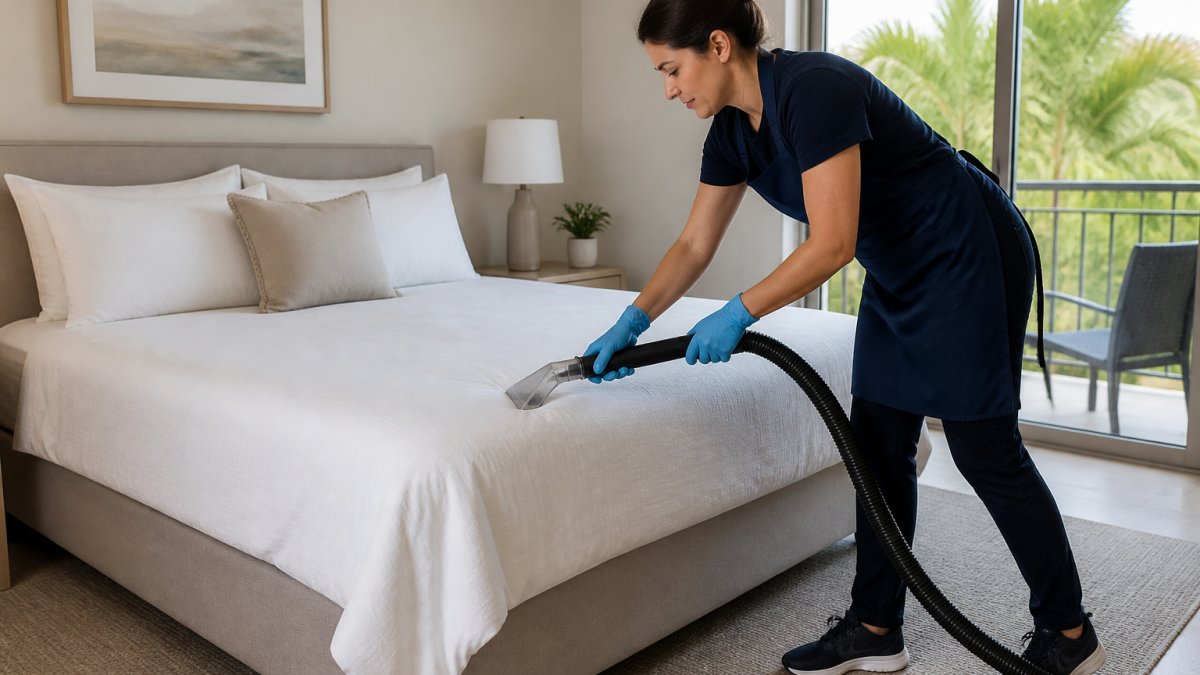
- Soft surfaces, mattress vacuuming, upholstery, curtains, area rugs, throw pillows
- Cabinet interiors, drawers, shelves, and cabinet fronts, especially near the stove
A turnover clean is your preventative maintenance for reviews. It happens in a tight window and covers the guest-facing surfaces. A deep clean is more like prophylaxis for the property itself. It removes the buildup equivalent of plaque: grease film, dust in vents, soap scum in grout, crumbs under the fridge.
Who does the work
Turnovers are usually handled by a single cleaner on a tight clock. Deep cleans are typically a two-person job, or a single cleaner with a full day blocked, because the work is slower and more physical. Some hosts split the job: a regular turnover crew handles the reset, and a specialist crew handles the deep clean on a separate day.
How the two jobs compare, task by task
| Task | Turnover Clean | Deep Clean |
|---|---|---|
| Wipe counters and sinks | Every guest | Every guest |
| Change linens | Every guest | Every guest |
| Scrub baseboards | Spot check | Full detail |
| Clean inside oven and fridge | No | Yes |
| Wash cabinet fronts and interiors | No | Yes |
| Scrub grout and vents | No | Yes |
| Wash curtains and vacuum upholstery | No | Yes |
| Pull out fridge and stove | No | Yes |
| Typical crew size | 1 cleaner | 1-2 cleaners |
| Typical timing | 2-3 hours | 4-8 hours |
| Typical cadence | Every checkout | Every 4-6 weeks to twice a year |
The two jobs are not competitors. They are a system.
Your Airbnb Turnover Cleaning Checklist for Every Guest
Every turnover should follow the same checklist, every time. Consistency is what protects your ratings when you cannot be there in person.
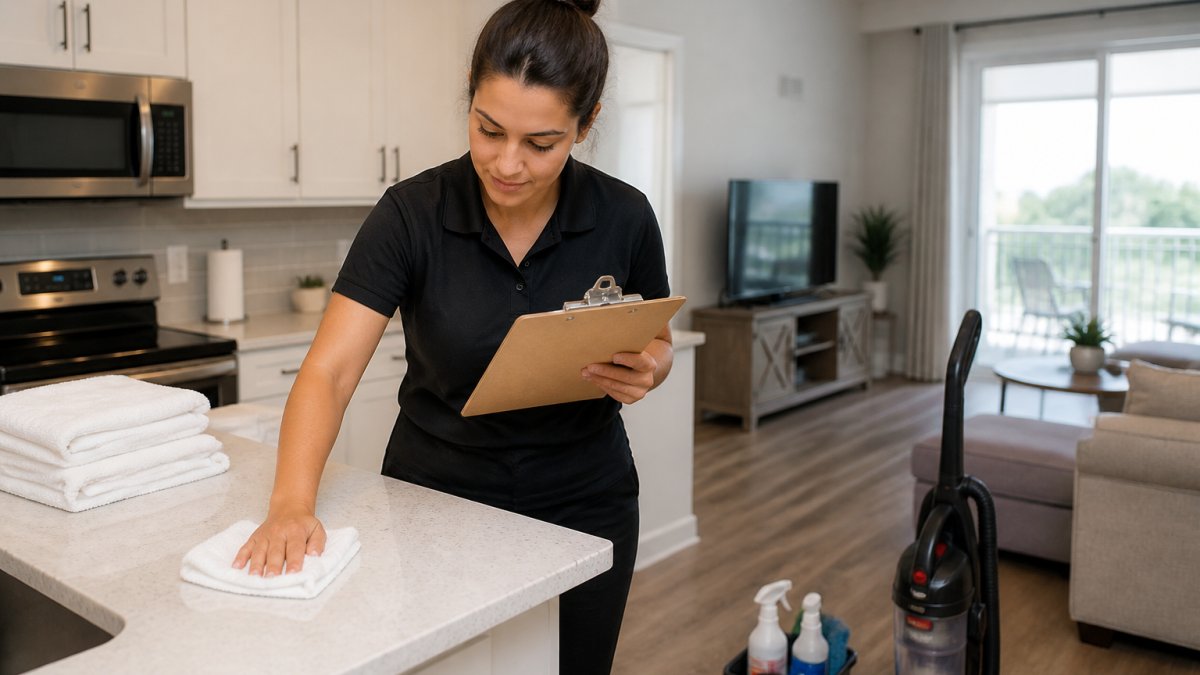
Here is a comprehensive turnover checklist for short-term rentals:
- Strip beds and start laundry first
- Wipe and sanitize all kitchen counters
- Clean and disinfect sinks, toilets, and showers
- Wipe high-touch points: handles, remotes, switches
- Replace linens and remake beds
- Restock paper goods and toiletries
- Vacuum and mop all floors
- Empty all trash and replace liners
- Check under beds and furniture for left items
- Run a final walkthrough with lights on
That last step matters more than hosts expect. A final pass with every light on catches streaks, missed spots, and stray hair that a quick glance misses.
A customized checklist beats a generic one. Every rental has its own trouble spots, and your turnover should target them.
Signs Your Rental Needs a Deep Clean, Not Just a Turnover
Certain signals tell you a turnover will not cut it. When you see these, book a deep clean before the next guest arrives.
Watch for:
- Grease film on cabinet fronts near the stove
- Dust buildup on ceiling fans, vents, and blinds
- Soap scum or discolored grout in showers
- Odors that linger after a standard clean
- Sticky or gritty floors even after mopping
- Stained or dull grout lines in tile
- Visible buildup inside the oven or fridge
Guests notice these details even when they cannot name them. A faint smell or a gritty floor shows up in reviews as "not as clean as expected."
That phrase costs bookings. It is worth catching the signs early.
How Long to Deep Clean a Rental Property
A deep clean of a rental property typically takes 4 to 8 hours, depending on size, condition, and how long it has been since the last one.
A one-bedroom unit in good shape may finish in about 4 hours. A three-bedroom home with buildup, pets, or a long gap since the last deep clean can run 8 hours or more.
The number moves based on:
- Square footage and number of bathrooms
- Condition at the start
- Time since the last deep clean
- Add-ons like inside cabinets, oven, and fridge
Do not stack a deep clean into a same-day turnover window. Give it its own day on the calendar. Rushing it defeats the purpose.
Building a Deep Cleaning Schedule for Vacation Rentals
A deep cleaning schedule for vacation rentals should match your booking volume, not the calendar. High-turnover units need deep cleans more often than quiet ones.
Use this as a starting point:
| Booking Volume | Deep Clean Frequency |
|---|---|
| Weekly back-to-back guests | Every 4-6 weeks |
| Two to three stays per month | Every 2-3 months |
| Occasional or seasonal rentals | Twice per year |
| After pets or long stays | Immediately after checkout |
Track it the same way you track linen replacement. Put it on a recurring calendar with a reminder two weeks out.
A simple rule: the busier the calendar, the shorter the gap between deep cleans. More guests means more bacteria accumulation, more traffic, and faster wear on every surface.
The Cost of Skipping Deep Cleans: Long-Term Risks for Hosts
Skipping deep cleans does not save money. It shifts the cost to a later, larger bill, and the later bill is almost always bigger than the deep cleans you skipped.
The math of deferral
A deep clean costs a fraction of the repair it prevents. The pattern is consistent across properties:
- Grout and caulk. Regular deep cleaning keeps grout sealed and caulk intact. Skip it and grout stains, caulk cracks, and water gets behind the tile. Regrouting a shower costs many times what a deep clean costs, and it takes the bathroom out of service for days.
- Appliance seals and filters. Grease and dust shorten the life of oven door gaskets, dishwasher seals, and range hood filters. A clogged dryer vent is both a fire risk and a service call. Replacing a sealed appliance costs more than a year of deep cleans.
- Flooring. Grit and moisture work under the surface of vinyl plank, hardwood, and tile. Once the finish is worn through, refinishing or replacement is the only fix.
- Soft surfaces. Mattresses, upholstery, and curtains hold odors and allergens. Once they are saturated, cleaning may not be enough, replacement is the answer.
The rule of thumb most operators use: a deep clean every 4-6 weeks costs less per year than one mid-range repair. Deferral does not eliminate the cost. It compounds it.
The revenue side of the ledger
Reviews are the other half of the math. A listing with lingering odors or gritty floors collects lower ratings, and lower ratings push you down in search results. On the major booking platforms, search placement drives occupancy, and occupancy drives revenue. A single drop in average rating can cost far more in lost bookings than a year of deep cleans.
That is the cost-benefit trade-off in one line: preventative maintenance is cheap, restorative work is expensive, and lost bookings are the most expensive of all.
Insurance and liability considerations
Hosts should check their short-term rental insurance policy and their platform's host protection terms. Most policies require the host to maintain the property in a reasonable condition, and a claim can be denied if neglect is a factor. A documented deep cleaning schedule is useful evidence if a guest files a claim related to allergens, pests, or property condition. Keep records: date, scope, and who performed the work.
A simple decision rule
If the cost of a deep clean is less than the cost of the repair it prevents, do the deep clean. For most hosts, that is true for grout, caulk, appliance seals, and flooring. Put the deep clean on a recurring calendar, track it the same way you track linen replacement, and treat it as a fixed operating cost rather than a discretionary one.
Conclusion: Finding the Right Balance for Your Rental
The honest answer to whether deep cleaning is necessary between every guest is no, but the follow-up matters more. Deep cleans are necessary on a schedule, and hosts who treat them as optional pay for it later.
That is exactly the system Chelsea Cleaning Company helps hosts implement. We offer customized Airbnb turnover checklists, specialized deep cleaning including baseboards, cabinets, fridge, and oven, flexible scheduling options, and a 24-hour satisfaction guarantee.
Frequently Asked Questions
Can you refuse a deep cleaning and get a regular cleaning?
Yes, you can decline a deep clean and stick with regular turnover cleaning between guests. For short-term rentals, a standard turnover covers surface cleaning, sanitization of high-touch areas, and restocking supplies. A deep clean is not required after every stay. However, most cleaning professionals recommend scheduling a deep clean every four to eight turnovers, or at least quarterly, to address buildup that routine cleaning does not reach. Skipping deep cleans entirely can lead to visible grime in kitchens and bathrooms that guests will notice.
How often should a short-term rental get a deep cleaning?
Most hosts should schedule a deep clean every four to eight guest turnovers, or at minimum once per quarter. High-traffic properties with pets, longer stays, or frequent cooking may need one more often. A deep cleaning schedule for vacation rentals should also account for seasonal shifts, such as after summer crowds or holiday bookings. If you notice lingering odors, stained grout, or dusty baseboards during routine turnovers, that is a signal to move the deep clean up on your calendar. Consistent scheduling prevents small issues from becoming costly problems.
What is the difference between turnover cleaning and deep cleaning?
Turnover cleaning happens between every guest and focuses on surface cleaning, disinfection of high-touch areas like doorknobs and remotes, changing linens, and restocking supplies. It is designed to make the rental guest-ready in a few hours. Deep cleaning goes further: it includes baseboards, inside appliances, cabinet interiors, vents, and areas behind and under furniture. Deep cleaning takes significantly longer and is not needed after every stay. Understanding the difference between turnover cleaning vs deep cleaning helps hosts set realistic schedules and budgets without over-cleaning or under-cleaning their property.
How long does a deep clean take for a vacation rental?
A deep clean for a vacation rental typically takes four to eight hours depending on the property size and condition. A one-bedroom unit may take four to five hours, while a three-bedroom home with multiple bathrooms can take six to eight hours or more. Factors that extend the time include heavy kitchen grease, stained grout, pet hair, and neglected areas like baseboards and vents. Knowing how long to deep clean a rental property helps you block the right window between bookings and avoid rushed turnovers that leave details unfinished.
